U.S. Measles Cases Top 2,300, Surpassing 2025 Record
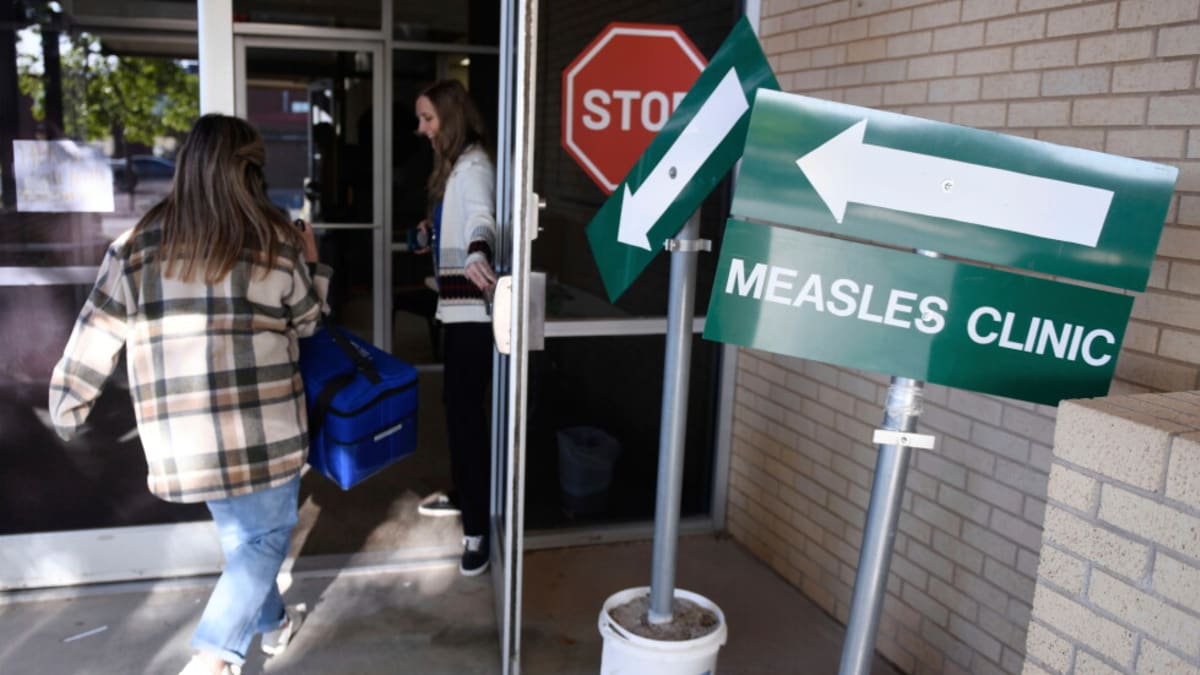
The CDC reported more than 2,300 measles cases in the U.S. as of July 25, 2026, surpassing the full-year 2025 total with five months still left in the year.
The Morning Brief Desk · July 25, 2026 · Based on reporting by AP News
The U.S. Centers for Disease Control and Prevention said Friday that the country has recorded more than 2,300 measles cases as of July 25, 2026, AP reported. That figure already exceeds the total logged for all of 2025, which was itself a record-breaking year, and five months remain in 2026.
The case count comes as national vaccination rates have dropped below the threshold needed to maintain herd immunity, the first time that has happened in decades, according to the material. That threshold represents the level of population-wide coverage required to prevent the virus from spreading through communities.
Measles has caused thousands of infections across several states since 2025, along with hundreds of hospitalizations and three confirmed deaths, according to Science Daily. Canada and Mexico have also experienced major outbreaks involving multiple deaths, raising questions about whether North America can hold onto its measles elimination status.
The context
Measles had been declared eliminated in the United States, but the virus has been making a sustained return since 2025. Last year's case count was considered a record at the time; 2026 has now surpassed it before the calendar year is even finished.
The drop in vaccination rates below the herd immunity threshold is a key factor. When coverage falls below that level, the virus can find enough unvaccinated individuals to sustain chains of transmission that would otherwise die out.
Researchers at Georgia State University's Center for Translational Antiviral Research have been working on a potential additional tool. Their work, published in Nature Microbiology, tested a drug candidate called GHP-88310, a broad-spectrum inhibitor that blocks a viral enzyme the pathogen needs to reproduce. The experiments used canine distemper virus in ferrets, an animal model that closely resembles measles in humans.
Why it matters
Crossing the 2025 full-year case record with five months remaining points to a worsening trajectory for a disease that had been considered eliminated in the U.S. Falling below the herd immunity threshold means communities have less of a buffer against further spread. Families with children, people who cannot be vaccinated for medical reasons, and communities with lower vaccination rates face the most direct exposure to risk. The situation also puts pressure on public health policy at a time when vaccination rates are already declining.
What’s next
The CDC has not announced specific response measures in the material provided. Researchers say the experimental antiviral GHP-88310 could eventually complement traditional ring vaccination strategies, though results so far come only from animal studies and human trials have not been announced. The case count will continue to be tracked through the remainder of 2026.
Sources
AP News — 2026 US measles case count tops last year's
The U.S. has surpassed 2025's record for measles cases, with five months left in 2026. The U.S. Centers for Disease Control and Prevention said Friday it has logged more than 2,300 cases of measles as of July 25.
STAT News — There are already more U.S. measles cases this year than in all of 2025$ Subscription
The number of measles cases in the U.S. has surpassed the record-breaking tally for all of 2025, with five more months of 2026 still to come.
Science Daily — A new antiviral could stop measles before an outbreak takes off
An experimental pill prevented a measles-like virus from spreading through the air or through close contact in ferrets. It worked when given shortly before or after exposure and also shortened illness.
See a mistake? Report an error
 Science & Technology
PHP Vulnerabilities Force Major Websites Offline Worldwide
Wired
 Science & Technology
Musk Pledges SpaceX Share for Every US Child
Axios
 Science & Technology
FTC Subpoenas OpenAI and Anthropic Over Safety Failures
Ars Technica
 Science & Technology
Eight States Sue OpenAI Over Child Safety
The Verge