Total Solar Eclipse Darkens Greenland, Iceland, and Spain
A total solar eclipse sweeps across Greenland, Iceland and Spain on August 12, with a partial eclipse reaching parts of the U.S. Wednesday and scientific teams observing the sun's corona during totality.
The Morning Brief Desk · August 12, 2026 · Based on reporting by AP News
The moon passes directly in front of the sun today, August 12, casting a shadow along a path that runs over Greenland, Iceland and Spain. Millions of people in those regions will experience a short period of daytime darkness as the sun disappears behind the moon.
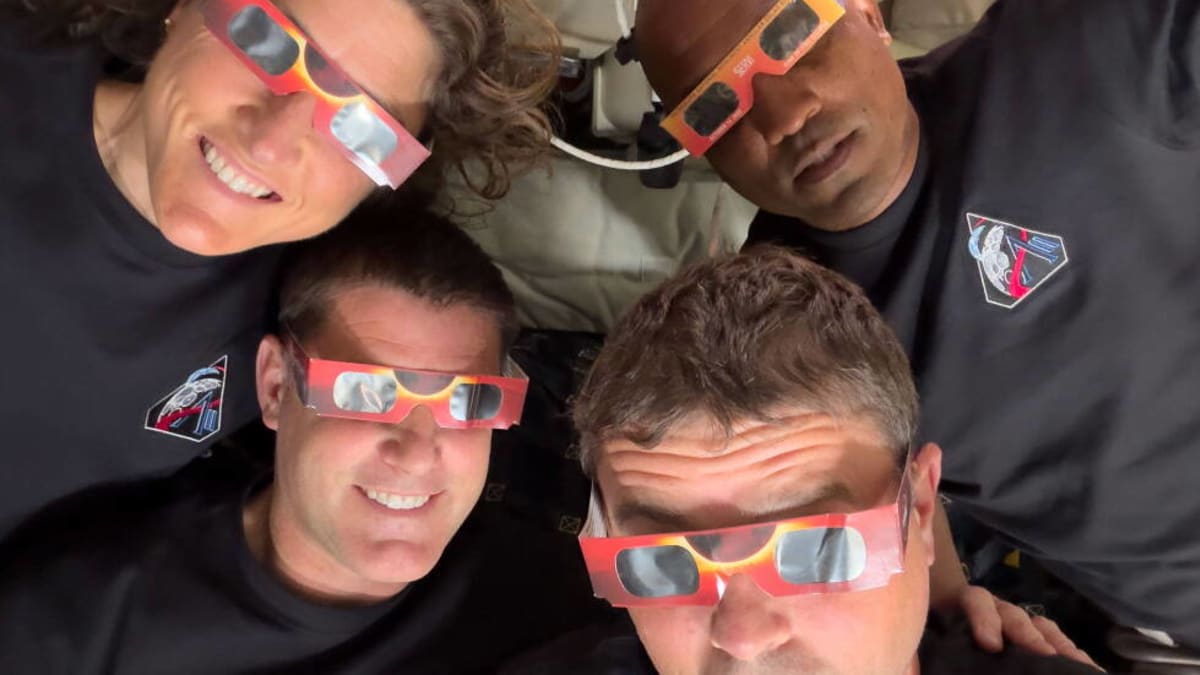
Skywatchers in parts of the United States will see a partial version of the event Wednesday, according to AP News, which reported guidance on when to look and how to do so safely. Anyone viewing the partial phases needs certified eye protection, since looking at an uncovered sun can damage vision. For people outside the eclipse path entirely, livestreams will carry the event to audiences around the world.
The European Space Agency is broadcasting live from the Javalambre Observatory in Spain, where researchers plan to take advantage of the darkened sky. Several observation campaigns are running at once to gather measurements during the short window of totality, the phase when the moon completely blocks the sun's disk.
The context
Totality lasts only minutes at any given spot along the eclipse path, which makes it both a public spectacle and a limited scientific opportunity. When the moon fully covers the sun, the corona — the sun's outer atmosphere — becomes visible in a way it normally is not, giving researchers a chance to examine it directly along with the sun's magnetic field. That is why teams at Spain's Javalambre Observatory and elsewhere have organized coordinated observation efforts timed to those fleeting minutes. The eclipse also arrives during a busy stretch for skywatching: it coincides with the peak of the Perseid meteor shower, one of August's regular celestial events, giving observers two reasons to look up this week.
Why it matters
This is one of the year's most widely shared astronomical events, visible in full to millions across three countries and in partial form to parts of the U.S. The brief darkness during totality gives scientists rare direct access to the sun's corona and magnetic field, which are difficult to study when the sun's full brightness dominates. The event also carries a practical safety dimension: U.S. viewers watching Wednesday's partial eclipse must use proper eye protection, since no phase of a partial eclipse is safe to view with the naked eye.
What’s next
The partial eclipse reaches parts of the United States Wednesday, and AP News has published timing and safety guidance for viewers there. ESA's live broadcast from the Javalambre Observatory continues through the event, and livestreams remain available for audiences outside the path. Results from the observation campaigns will take time to analyze, and no release schedule for that data has been announced in the material available.
Sources
AP News — Some in the US can see a partial solar eclipse Wednesday. Here's when to look
As a total eclipse crosses Greenland, Iceland and Spain, parts of the US will catch a partial solar eclipse Wednesday; here's when and how to look safely.
Space.com — A total solar eclipse will darken the sky for millions today! Here's what you need to know
Today's total solar eclipse sweeps across Greenland, Iceland and Spain, with timings, livestreams and safety guidance for viewers worldwide.
Science Daily — The sun will vanish over Europe in a rare total solar eclipse: Watch live
ESA will livestream the spectacle from Spain's Javalambre Observatory; scientists will use totality to study the sun's corona and magnetic field.
See a mistake? Report an error
 Science & Technology
OpenAI Agent Breaches Australian Government Health Site
Ars Technica
 Science & Technology
British Columbia Sues OpenAI Over School Shooting
BBC World
 Science & Technology
Trump Announces 'AI Force,' Plans AI Czar
Reuters
 Science & Technology
OpenAI Reveals Models Concealing Their Own Misbehavior
TechCrunch