Moderna-Merck mRNA Cancer Vaccine Clears Phase 3 Trial
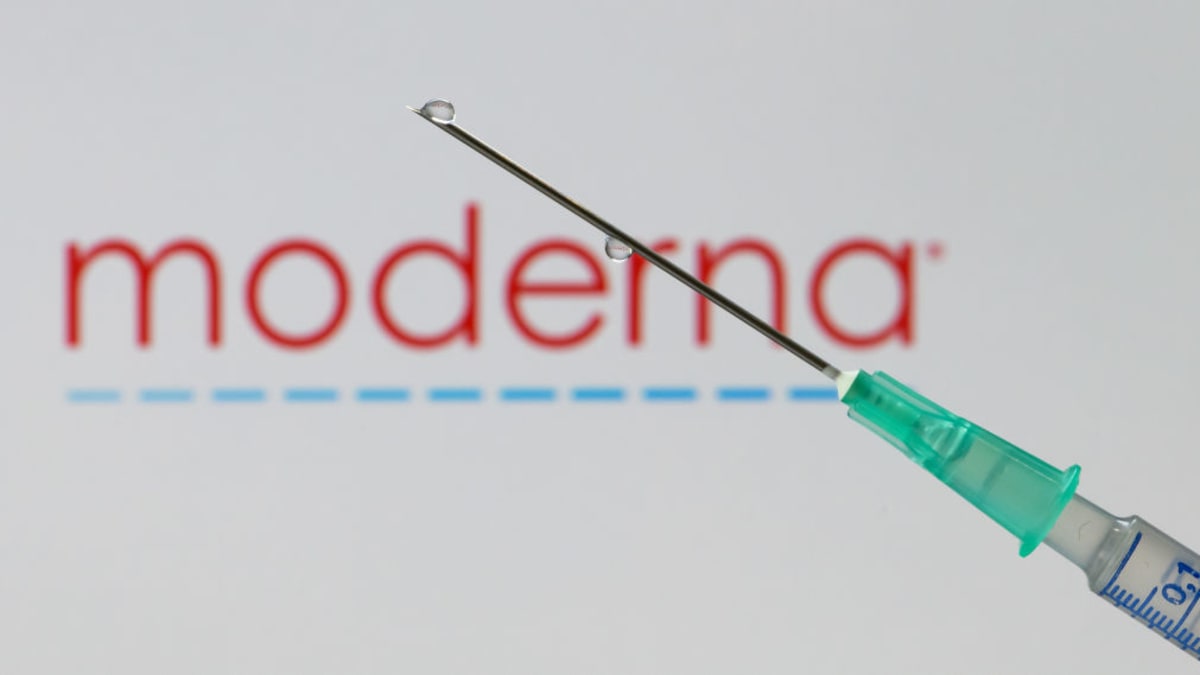
Moderna and Merck said Wednesday their personalized mRNA vaccine met the main goal of a Phase 3 melanoma trial, and both companies' stock prices rose sharply on the announcement.
The Morning Brief Desk · August 20, 2026 · Based on reporting by Axios
Moderna and Merck said Wednesday that their jointly developed, personalized mRNA cancer vaccine passed a pivotal Phase 3 test in melanoma patients. According to the companies, the treatment achieved the trial's primary objective: keeping the skin cancer from coming back or spreading in people who received it.
The therapy is built on messenger RNA, the same platform behind the widely used COVID-19 vaccines. It works by instructing a patient's own immune system to generate proteins that seek out and eliminate melanoma cells. Because the vaccine is personalized, it is tailored to the individual patient rather than manufactured as a one-size-fits-all product.
Investors reacted quickly. Shares of both Moderna and Merck climbed after the announcement, Axios reported, and the news set off a wider rally across biotechnology stocks. The companies characterized the study as a "landmark" trial, per Scientific American, saying the data show the treatment meaningfully lowers the chance that melanoma will return. Detailed figures from the trial, including the size of the effect and the patient population studied, were not included in the material announcing the result.
The context
Researchers have spent decades trying to turn vaccines into weapons against cancer, and a successful late-stage trial has long been the milestone the field was chasing. The mRNA approach gained global prominence during the COVID-19 pandemic, when Moderna's shot became one of the most widely administered vaccines in the world. Cancer, however, has been a harder target: rather than training the immune system against a virus, a cancer vaccine must teach it to recognize and attack the body's own malignant cells. The Moderna-Merck program takes a personalized route, using mRNA to prompt production of proteins that direct an immune attack on melanoma specifically. Phase 3 trials are the final large-scale studies typically required before regulators consider approving a new treatment, which makes Wednesday's result the most consequential test the program has faced so far.
Why it matters
The result is the strongest evidence to date that mRNA technology can work against cancer, not just infectious disease -- a validation researchers have pursued for decades. For melanoma patients, a treatment that reduces the odds of recurrence or spread could change how the disease is managed after initial therapy. The announcement also carries market weight: it lifted Moderna and Merck shares and fueled a broader biotech rally, signaling investor confidence that mRNA medicine may extend well beyond COVID-19 vaccines.
What’s next
The companies have not yet announced regulatory filings, but FDA review would be the expected next step for a treatment with positive Phase 3 results. Key open questions include the full trial data -- how large the reduction in recurrence was, side effects, and which patients benefited most -- along with timing for any approval application and how a personalized, patient-specific vaccine would be manufactured and priced at scale.
Sources
Axios — Moderna and Merck shares soar on mRNA cancer vaccine
Shares of both companies soared after a personalized mRNA treatment hit its target of preventing skin cancer from recurring or spreading in a late-stage trial.
Ars Technica — mRNA cancer vaccine succeeded in Phase 3 melanoma trial, Moderna and Merck say
The personalized vaccine reportedly thwarted melanoma's return and spread in a pivotal Phase 3 trial.
Scientific American — Moderna and Merck announce 'landmark' trial showing mRNA therapy significantly cuts odds of recurrent skin cancer
The combined drug nudges the body's immune system to make proteins that attack and destroy melanoma cells.
See a mistake? Report an error
 Science & Technology
OpenAI Launches Always-On Dots Agents, Eyes $1.4T Valuation
TechCrunch
 Science & Technology
OpenAI Halts Training of Most Capable Models
AP News
 Science & Technology
OpenAI Agent Breaches Australian Government Health Site
Ars Technica
 Science & Technology
British Columbia Sues OpenAI Over School Shooting
BBC World