Iran, U.S. Exchange War's Largest Shipping Attacks
Iran and the U.S. traded their heaviest attacks on shipping since the war started, Iranian missiles damaged American jets in Jordan, and the IAEA sent Iran's case to the UN Security Council.
The Morning Brief Desk · September 10, 2026 · Based on reporting by Defense News
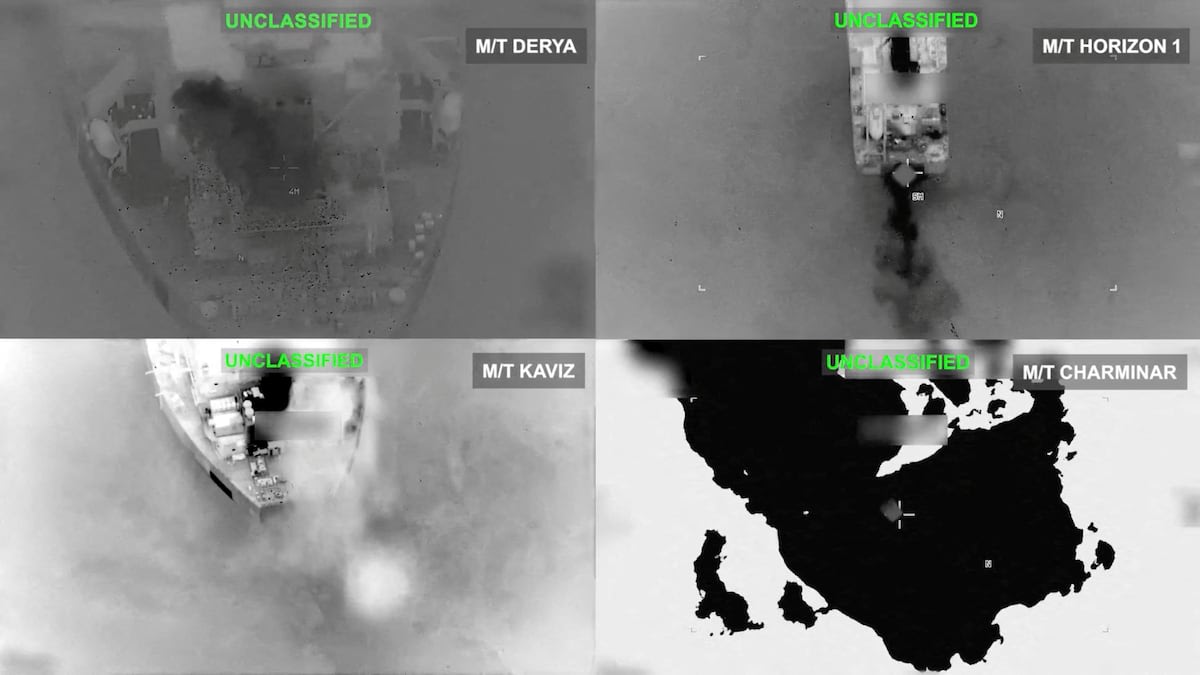
Iran and the United States carried out their most extensive round of attacks on shipping since the start of the war, with each side hitting a mix of military, maritime and energy targets, Defense News reported. The strikes ended roughly a month in which the Strait of Hormuz had seen comparatively little violence.
In a separate attack, an estimated 20 Iranian ballistic missiles hit Muwaffaq Salti Air Base in Jordan, according to the Washington Examiner. Several U.S. fighter jets were damaged in the strike, which landed directly on American military hardware stationed at the base.
On the diplomatic front, the board of the International Atomic Energy Agency voted to send Iran's case to the UN Security Council, AP reported. It marked the first time in 20 years the UN nuclear watchdog has taken that step against Tehran. The board acted after concluding that Iran had failed to cooperate with an inquiry into uranium particles that agency inspectors had found. The full scope of damage from the shipping strikes, along with any casualties at the Jordanian base, was not detailed in the available reporting.
The context
The exchange follows a stretch of about a month in which activity in the Strait of Hormuz had been relatively quiet, according to Defense News. That lull ended with the wave of strikes by both Iran and the United States on ships, energy infrastructure and military assets on each side.
The IAEA referral has its own history. Agency inspectors detected traces of uranium and opened an investigation, but the watchdog says Iran did not cooperate with that inquiry. The board's decision to escalate the matter to the Security Council is the first of its kind involving Iran in two decades, per AP. The reporting available does not specify when the war began or what triggered the earlier fighting.
Why it matters
The missile strike on Muwaffaq Salti Air Base put Iranian weapons directly onto U.S. military equipment, damaging multiple fighter jets — a step beyond attacks on shipping or proxies. The scale of the maritime strikes matters for global trade: the Strait of Hormuz is a key chokepoint, and oil prices above $100 a barrel are reaching American consumers at the gas pump. The IAEA referral adds a nuclear dimension, moving Iran's file to the body with authority to impose international measures for the first time since the mid-2000s.
What’s next
The UN Security Council now holds Iran's nuclear file, though what action it might take — and on what timeline — has not been announced. Key open questions include whether the U.S. will respond militarily to the strike on its aircraft in Jordan, whether attacks in the Strait of Hormuz continue or another pause takes hold, and how oil markets react to sustained threats against shipping in the waterway.
Sources
Defense News — Iran and US hit tankers in biggest wave of attacks on shipping since war began
Both sides struck military, shipping, and energy assets in the largest wave of attacks on shipping since the war began, shattering a month of relative calm in the Strait of Hormuz.
AP News — UN nuclear watchdog board reports Iran to the UN Security Council for the first time in 20 years
The IAEA board referred Iran to the UN Security Council over its failure to cooperate with an investigation into detected uranium traces — the first such referral in two decades.
Washington Examiner — Iranian ballistic missiles hit US aircraft at Jordanian air base
An estimated 20 Iranian ballistic missiles struck Muwaffaq Salti Air Base in Jordan, damaging multiple US fighter jets in a direct hit on American military assets.
See a mistake? Report an error
 Politics & World
Brazil Votes in Tight Lula-Bolsonaro Presidential Runoff
BBC World
 Politics & World
U.S. Intelligence Memo Warns of Advanced Iranian Plots
Axios
 Politics & World
US and Israel Weigh New Iran Strikes
Stars and Stripes
 Politics & World
Ukraine says Starlink restrictions persist despite Trump claim
BBC World