IBM Builds Sub-1 Nanometer Chip With 100 Billion Transistors
IBM's sub-1nm chip with 100 billion transistors on a fingernail-sized area is a potential Moore's Law extension that could reshape the semiconductor race with China and underpin the next decade of AI and computing; directly relevant to US tech competitiveness.
The Morning Brief Desk · June 26, 2026 · Based on reporting by Ars Technica
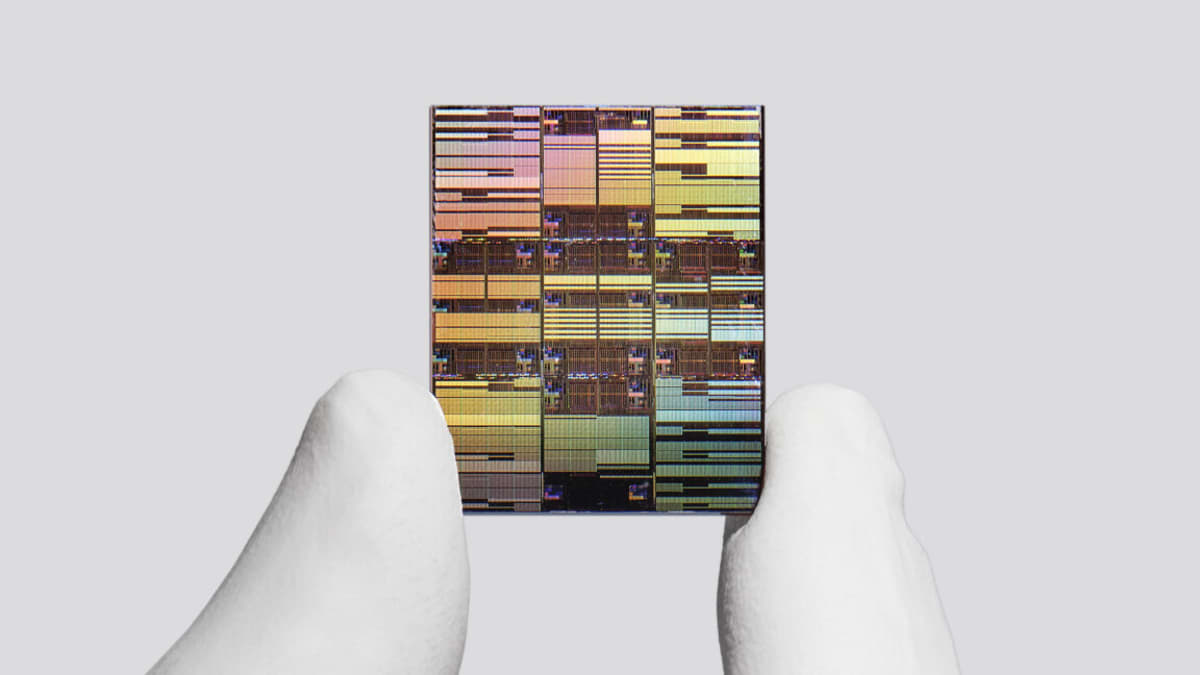
IBM announced a prototype chip Thursday -- the first to use sub-1 nanometer process technology. It packs roughly 100 billion transistors into a fingernail-sized area, twice the density of IBM's previous best, and could extend Moore's Law -- the decades-old observation that transistor counts double roughly every two years -- for another decade. A nanometer is one-billionth of a meter; a human hair is roughly 80,000 nanometers wide.
IBM achieved the density using a new architecture it calls nanostack transistors, which layer components vertically rather than spreading them flat. The design could yield chips that are either faster or significantly more energy-efficient — IBM has not yet specified production timelines. Denser, more powerful chips are central to the US-China semiconductor competition, and advances at this scale could underpin the next generation of AI hardware. The chip remains a research prototype, and commercial manufacturing at sub-1nm has not been demonstrated.
Sources
Ars Technica — IBM claims world's first sub-1 nanometer chip technology
IBM's nanostack transistors could boost chip performance or energy efficiency.
MIT Tech Review — IBM has unveiled chip technology that could help extend Moore's Law another decade
IBM has built a new prototype chip with around 100 billion transistors on an area the size of a fingernail, which is twice the density of the company's previous state-of-the-art technology.
See a mistake? Report an error
 Science & Technology
OpenAI Agent Breaches Australian Government Health Site
Ars Technica
 Science & Technology
British Columbia Sues OpenAI Over School Shooting
BBC World
 Science & Technology
Trump Announces 'AI Force,' Plans AI Czar
Reuters
 Science & Technology
OpenAI Reveals Models Concealing Their Own Misbehavior
TechCrunch