Francis Halzen Wins Physics Nobel for Cosmic Neutrinos
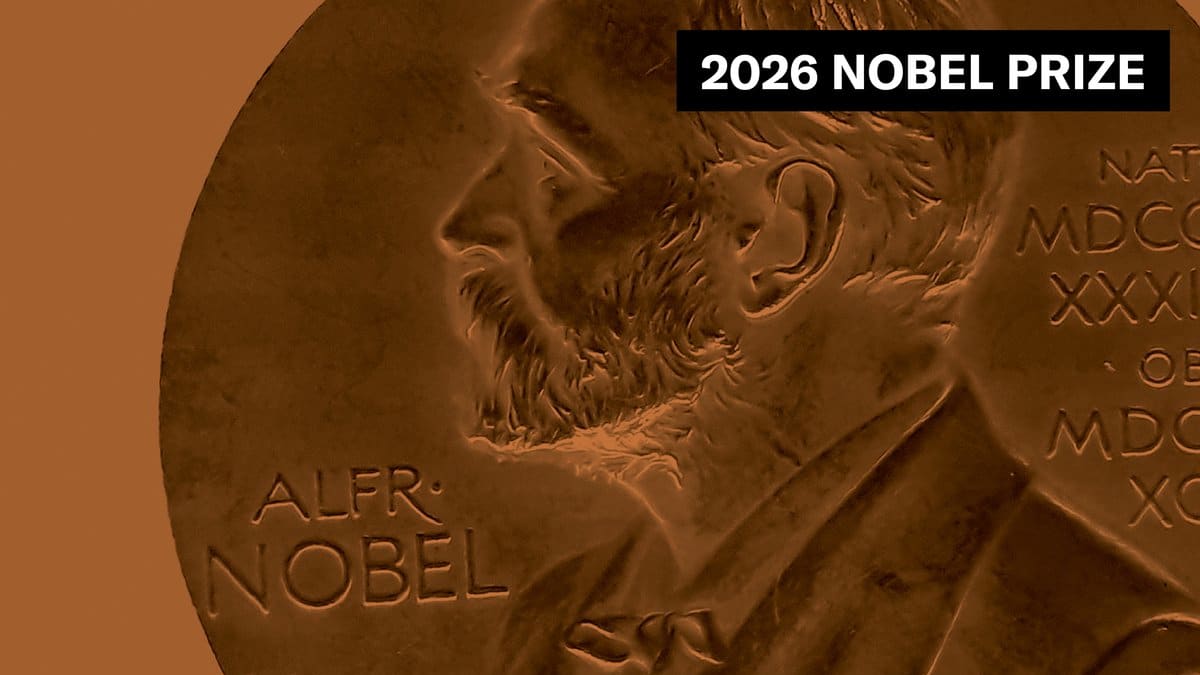
Francis Halzen, an 82-year-old University of Wisconsin-Madison physicist, received the 2026 Nobel Prize in Physics on Tuesday for detecting high-energy neutrinos arriving from outside the solar system.
The Morning Brief Desk · October 6, 2026 · Based on reporting by Scientific American
The Royal Swedish Academy of Sciences announced Tuesday that the 2026 Nobel Prize in Physics goes to Francis Halzen, a physicist at the University of Wisconsin-Madison, for finding high-energy neutrinos that originate in deep space. Halzen, who is 82 and was born in Belgium, led the IceCube Neutrino Observatory, the experiment buried in the ice at the South Pole that made the detections possible.
The particles at the center of the award are neutrinos of astrophysical origin — meaning they traveled to Earth from sources beyond our solar system. Neutrinos carry the nickname "ghost particles" because they pass through ordinary matter almost without a trace, which has long made them among the most difficult particles for physicists to observe. IceCube was built to catch the rare moments when they do leave a signal.
Scientific American, DW and Phys.org all reported the award Tuesday, crediting Halzen's direction of the IceCube project and the resulting evidence that some of the neutrinos reaching Earth come from cosmic sources. The announcement came during Nobel Prize week, the annual series of award reveals in Stockholm.
The context
Halzen's pursuit of these elusive particles stretches back roughly four decades. According to Phys.org, his effort to record neutrinos at the South Pole began in the 1980s, long before IceCube became an operating observatory. The choice of location was central to the science: the Antarctic site, one of the most isolated research environments anywhere, offered the conditions needed to register the faint signatures neutrinos leave behind.
The project grew into a long-running, American-led undertaking anchored at the University of Wisconsin-Madison, where Halzen has worked. Because neutrinos so rarely interact with matter, confirming that some of them arrive with high energies from astrophysical sources required both the specialized detector and years of sustained observation. The Nobel committee's recognition ties together that full arc — from the early South Pole experiments of the 1980s to IceCube's eventual discovery.
Why it matters
The physics Nobel is among the most prominent honors in science, and this year it recognizes a U.S. research institution and a project built far from any laboratory campus. Confirming that high-energy neutrinos reach Earth from beyond the solar system gives astronomers a new kind of messenger for studying the universe — one that ordinary matter barely disturbs. The award also validates a decades-long bet: that a detector sunk into polar ice could capture particles most instruments cannot see, and that patient, large-scale infrastructure projects can deliver fundamental discoveries.
What’s next
The announcement came during Nobel week, when the remaining prizes are revealed on their scheduled days before the formal ceremonies later in the year. The material released so far does not detail whether Halzen shares the award with other researchers or how the prize money is structured, and further specifics from the Royal Swedish Academy of Sciences will fill in those details. IceCube's continued observations at the South Pole remain a point to watch.
Sources
Scientific American — 2026 Nobel Prize in Physics awarded to Francis Halzen for discovery of high-energy neutrinos
Halzen won for his leadership of the IceCube observatory and the discovery of high-energy neutrinos of astrophysical origin.
DW — Nobel Physics Prize goes to Francis Halzen for neutrino work
The Belgian-born physicist was recognized for contributions to the IceCube Neutrino Observatory at the South Pole.
Phys.org — Francis Halzen wins Nobel Prize in physics for work on high-energy neutrinos of astrophysical origin
The 82-year-old University of Wisconsin-Madison scientist's work capturing 'ghost particles' at the South Pole dates back to the 1980s.
See a mistake? Report an error
 Science & Technology
OpenAI Launches Always-On Dots Agents, Eyes $1.4T Valuation
TechCrunch
 Science & Technology
OpenAI Halts Training of Most Capable Models
AP News
 Science & Technology
OpenAI Agent Breaches Australian Government Health Site
Ars Technica
 Science & Technology
British Columbia Sues OpenAI Over School Shooting
BBC World