Early Voting Surpasses 43 Million Ahead of Midterms
More than 43 million Americans have voted early ahead of Tuesday’s midterm elections, which will decide which party controls Congress.
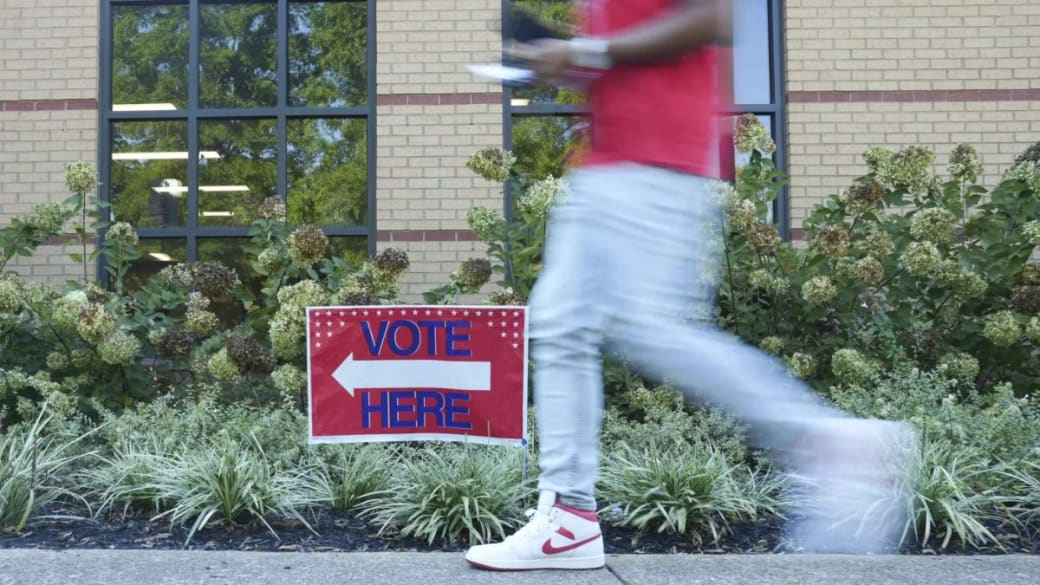
Early voting totals have climbed past 43 million ballots as Tuesday’s midterm elections approach, a contest that will settle which party holds Congress. The tally reflects votes cast in person and by mail across the country in the weeks leading up to Election Day on Nov. 3.
In the closing stretch, President Donald Trump called off two scheduled in-person rallies, one in Kansas and one in Iowa. The Hill reported that both canceled events were set for states with closely fought Senate contests. Rather than appearing on stage, Trump plans to participate in tele-rallies reaching 19 states before voters head to the polls.
The shift comes as the fight for the Senate has grown broader in the campaign’s final days. According to NPR, the number of genuinely competitive races has widened, and roughly a half-dozen states could decide which party runs the chamber. The Washington Examiner framed the Republicans’ core concern heading into Tuesday as a question of degree: whether the results for the party in power turn out to be merely bad or something far worse.
The context
Midterm elections typically serve as a referendum on the party holding the White House, and this cycle the stakes center on control of both chambers of Congress. The 43 million-plus early ballots were cast before Election Day itself, meaning a large share of the electorate had already voted while the campaigns were still making their closing arguments.
Trump had planned a traditional schedule of in-person rallies through the final days, but the cancellations in Kansas and Iowa changed that approach. The Hill’s reporting tied those two states to competitive Senate races, which made the decision notable given how late in the campaign it came. The material does not explain why the events were called off. The tele-rally format allows the president to address audiences in 19 states at once without travel, a far wider reach than two individual stops would have provided.
Why it matters
Tuesday’s results will determine which party sets the legislative agenda in Congress, shaping what the Trump administration can accomplish in the second half of the term. With Senate control hinging on about a half-dozen states, small shifts in a handful of races could flip the chamber. The scale of early voting, more than 43 million ballots, means the outcome in many places was partly locked in before the final weekend. For Republicans, per the Washington Examiner, the question is less whether they lose ground as the party in power than how much.
What’s next
Election Day is Tuesday, Nov. 3. Before then, Trump is scheduled to join tele-rallies across 19 states. The races to watch are the roughly half-dozen Senate contests NPR identified as likely to decide control of the chamber. Key open questions include why the Kansas and Iowa rallies were canceled and whether the heavy early turnout signals an advantage for either party, which the vote counts on Tuesday will begin to answer.
Sources
Here are the Senate races to watch ahead of Election Day
The competitive Senate map has expanded considerably in the final days, with control of the chamber in play across a half-dozen states.
Trump to join tele-rallies 19 states after midterm event cancellations
Trump will appear in tele-rallies across 19 states before Election Day after canceling two in-person rallies in key Senate states.
An eleventh-hour GOP surge, or a looming blue blowout?
With days to go, the key question for Republicans is whether Election Day goes poorly or disastrously as the party in power.
See a mistake? Report an error · Corrections policy
More from the October 30, 2026 Brief
Business
Big Tech Loses Nearly $900 Billion on AI Doubts
Amazon shares fell 7% and Intel fell 25% in premarket trading Friday, extending a weekly rout that…
Business
Binance Halts Trading After Record $6.3 Billion Hack
Binance suspended trading and withdrawals Thursday after hackers drained an estimated $6.3 billion…