Anthropic AI Formalizes Fermat's Last Theorem in 11 Days
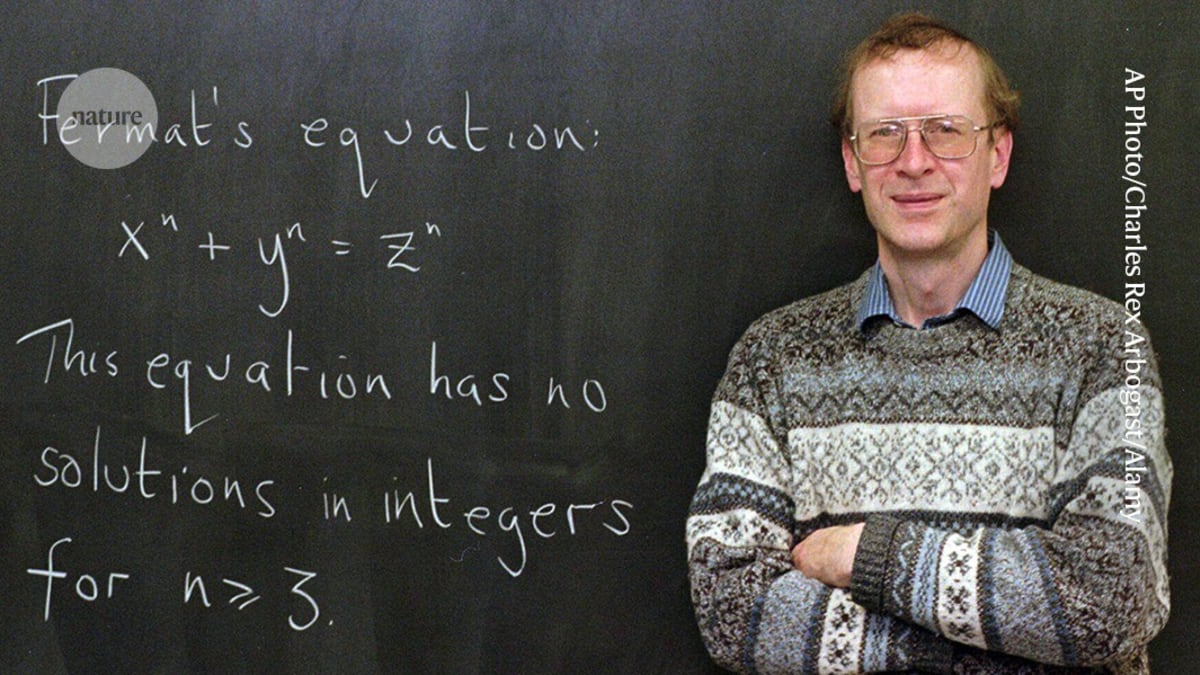
Anthropic's Claude AI agents converted the proof of Fermat's Last Theorem into 13 million lines of computer-verified code in 11 days, a task mathematicians expected to take years, Nature reported.
The Morning Brief Desk · September 8, 2026 · Based on reporting by Nature
Artificial-intelligence agents built on Anthropic's Claude chatbot have produced a complete, computer-verified formalization of Fermat's Last Theorem, finishing the job in 11 days, according to Nature. The result runs to 13 million lines of code, every line of which can be checked by software for logical errors.
Formalization means translating each step of a mathematical proof into a machine-readable format that verification software can audit link by link. For a proof as long and intricate as the one behind Fermat's Last Theorem, mathematicians had expected that conversion to take years of specialist labor. The AI agents completed it in under two weeks.
Nature reported that the work was done using an advanced prototype of Claude, and described the result as the first time the theorem — one of the most celebrated mathematical achievements of the past half-century — has been turned into computer-verified code. New Scientist, which also reported the milestone, framed the speed as the central surprise: a task budgeted in years, delivered in days.
The context
Fermat's Last Theorem has an unusually long history. Pierre Fermat proposed the conjecture more than 350 years before it was finally proved, and it resisted every attempt at a solution until mathematician Andrew Wiles completed a proof in 1994, according to Nature.
Wiles's proof settled the question for human mathematicians, but it had never been formalized — that is, rendered in code that a computer can verify step by step. Formalization has traditionally been slow, painstaking work reserved for human specialists with expertise in both the underlying mathematics and the verification software. That is why the expected timeline for converting a proof of this scale was measured in years, and why the 11-day turnaround by Claude-based agents drew attention from both Nature and New Scientist.
Why it matters
The result matters on two fronts. For mathematics, computer verification offers a stronger guarantee of correctness than traditional peer review: software confirms every logical link in a proof rather than relying on human reviewers to catch errors. Formalizing a result as prominent as Fermat's Last Theorem gives the field greater confidence in the proof itself. For AI, the feat suggests that agents can now handle formalization work previously limited to human specialists — and do it orders of magnitude faster than expected, as New Scientist noted. It is a concrete capability benchmark from a leading US lab, not a demonstration confined to toy problems.
What’s next
The reporting does not say what Anthropic plans to do next with the formalization system, or whether the prototype used for the work will be released more broadly. Open questions include how the 13-million-line codebase will be reviewed and used by mathematicians, and whether AI agents can formalize other major proofs at similar speed. Watch for further detail from Anthropic and follow-up coverage in Nature and New Scientist.
Sources
Nature — Anthropic AI 'formalizes' proof of Fermat's last theorem in just 11 days
Claude produced a 13-million-line, computer-checked proof of the famed conjecture — a major milestone in mathematics.
New Scientist — Fermat's last theorem formalised by AI agents in just 11 days$ Subscription
Converting the proof of Fermat's last theorem into computer-checkable code was expected to take years; Anthropic's Claude managed it in under two weeks.
See a mistake? Report an error
 Science & Technology
PHP Vulnerabilities Force Major Websites Offline Worldwide
Wired
 Science & Technology
Musk Pledges SpaceX Share for Every US Child
Axios
 Science & Technology
FTC Subpoenas OpenAI and Anthropic Over Safety Failures
Ars Technica
 Science & Technology
Eight States Sue OpenAI Over Child Safety
The Verge