Iran strikes Kuwait as U.S.-Iran fighting reignites
Kuwait's military said it was fending off Iranian missiles and drones Thursday as U.S.-Iran fighting resumed following a month-long pause, with Tehran alleging an American strike killed civilians at a wedding.
The Morning Brief Desk · September 3, 2026 · Based on reporting by CNBC Top News
Fighting between the United States and Iran flared again across the Middle East this week after roughly a month of relative calm. Kuwait's army reported Thursday that it was defending against incoming Iranian missiles and drones, according to CNBC.
The Iranian attacks came on the heels of a fresh round of American airstrikes on Iranian positions near the Strait of Hormuz. Defense News reported that the U.S. carried out those strikes in response to attempted attacks on American troops in the region by Iran's Islamic Revolutionary Guard Corps. The wave was the largest launched by U.S. forces in weeks.
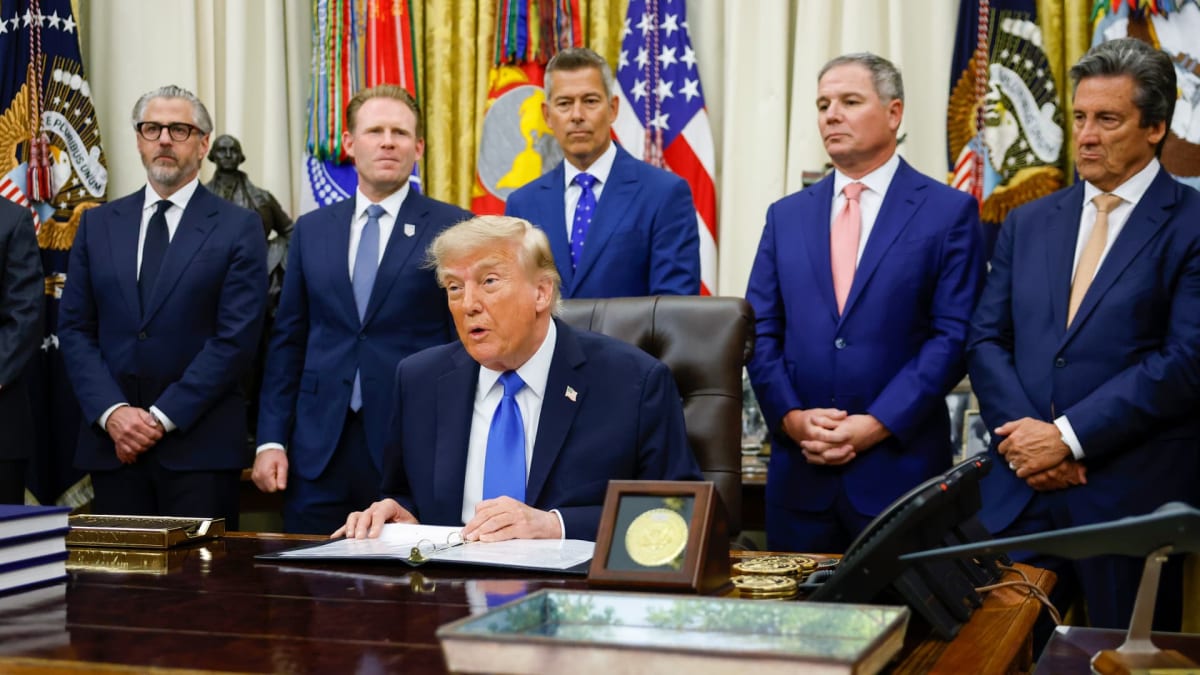
Tehran, meanwhile, accused the United States of killing civilians during its latest bombardment of southern Iran. AP reported that Iran says an American missile struck a house where a wedding was underway, a claim that has prompted accusations of war crimes. President Donald Trump, for his part, played down the prospect of a prolonged escalation, predicting the renewed hostilities would not last "too long." The exchange of fire puts American forces and Gulf countries squarely in the line of the widening confrontation.
The context
The current round of violence follows a lull of about a month in direct fighting between Washington and Tehran. According to Defense News, the sequence that reignited hostilities began with attempted IRGC attacks on American troops stationed in the region. The U.S. answered with airstrikes concentrated on Iranian targets around the Strait of Hormuz, the narrow waterway through which a large share of the world's oil shipments passes. Iran then extended the fight to Kuwait and leveled its civilian-casualty allegation over the reported wedding strike in southern Iran. Oil prices have climbed toward $100 a barrel amid the renewed fighting. The material does not specify what triggered the initial IRGC attempts on U.S. forces or the terms of the earlier pause in fighting.
Why it matters
The renewed exchange directly exposes American troops in the region and pulls Gulf states -- now including Kuwait -- into the conflict's path. Iran's civilian-casualty allegation, if substantiated, could intensify international pressure on Washington and complicate any de-escalation. Oil trading near $100 a barrel means the fighting is already reaching American consumers through energy costs, with potential political consequences ahead of the midterm elections. Trump's forecast of a short conflict sets a benchmark against which further escalation will be measured.
What’s next
Key open questions include whether Iran continues strikes on Gulf states, how the U.S. responds to the Kuwait attacks, and whether the wedding-strike allegation can be independently verified -- the U.S. account of that incident has not been detailed in the available material. Watch for further movement in oil prices and any signals from Washington or Tehran about a return to the earlier pause in fighting.
Sources
CNBC Top News — Iran strikes Kuwait as Trump says renewed Mideast hostilities will not last 'too long'
Kuwait's army said it was confronting hostile Iranian missile and drone attacks Thursday as Trump predicted renewed hostilities would be brief.
Defense News — US launches new barrage of strikes on Iran around Strait of Hormuz
The US launched new airstrikes on Iranian targets following attempted IRGC attacks against American troops in the region.
AP News — Iran says a US strike hit a wedding and killed civilians
Iran says a US missile hit a home hosting a wedding during the latest bombardment of southern Iran, killing civilians and drawing war-crime accusations.
See a mistake? Report an error
 Politics & World
US and Israel Weigh New Iran Strikes
Stars and Stripes
 Politics & World
Ukraine says Starlink restrictions persist despite Trump claim
BBC World
 Politics & World
U.S. Pulls Diplomats From Saudi Arabia After Houthi Strikes
CNBC Top News
 Politics & World
Russia Frees American Stephen Hubbard After Trump Request
NPR News